


They’ve transported and stood up complex structures as tall as skyscrapers multiple times a week. One member wrote the firmware to establish a high-bandwidth laser inter-satellite link in space. Another pioneered multiphysics plasma modeling for fusion ignition and deep-space thrust applications. Given that background, you can see why Applied Atomics’ Chief Engineer Chris Newton calls nuclear plant deployment work “mild.”
“Nothing in the plant’s operating envelope is new territory; most of it is milder than systems I was running daily,” Newton said.
The founding engineers have the history and expertise to make the type of power plant that people actually want safer and more efficient than ever before. Along with CEO and Co-Founder Ben Kellie, the Applied Atomics team is deploying clean energy with no groundwater usage that is built onsite directly for the customer, with modular growth capabilities. The plants are designed specifically to meet existing regulations, done on a timeline and at a cost that is finance friendly. Our leadership team knows how to navigate complex engineering, operations, and regulations. They have already built, tested, and operated systems that meet or exceed everything a nuclear plant requires.
Chris Newton: Two Decades Building at the Extremes
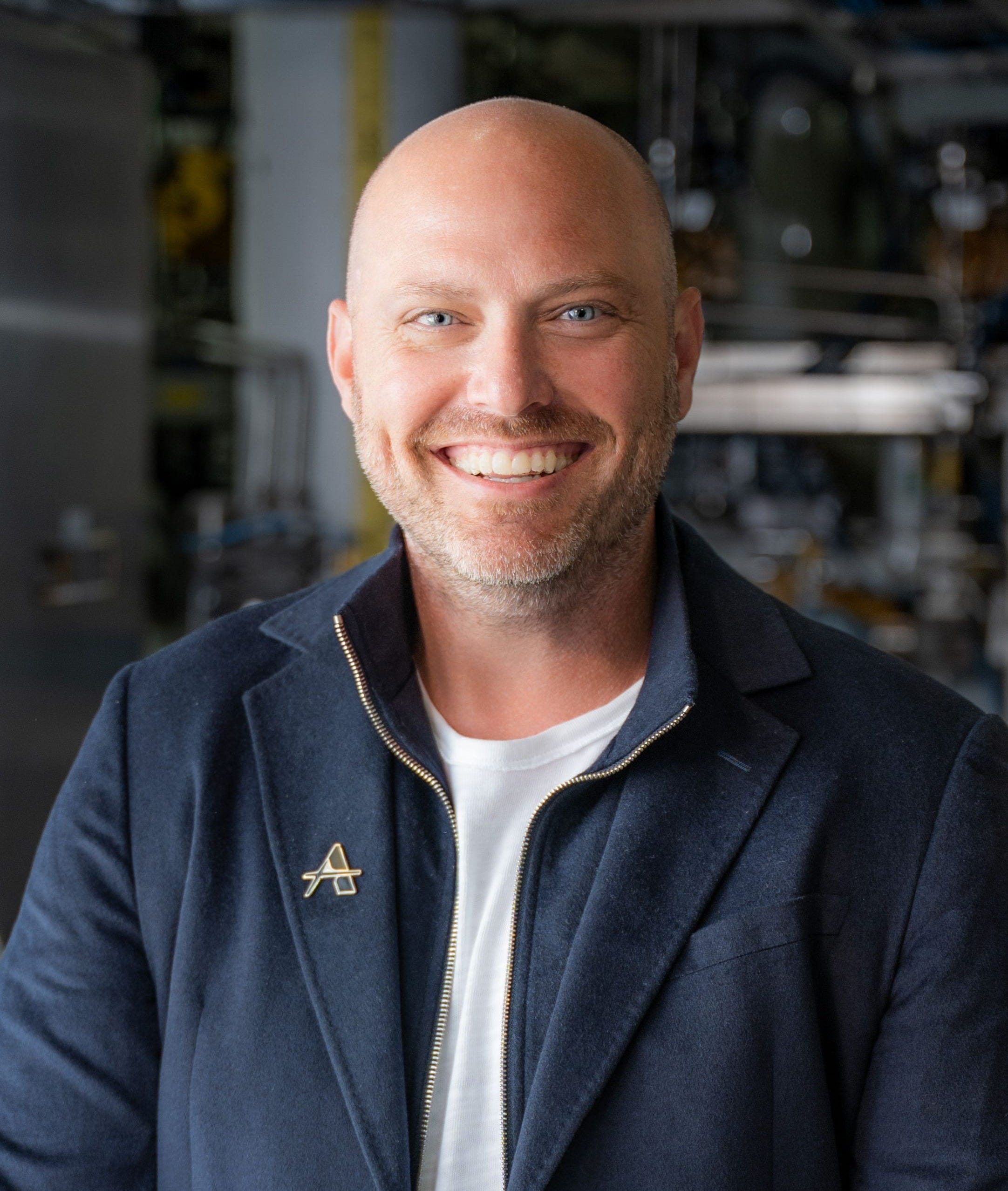
Chris Newton has spent the last 20 years in charge of engineering systems within some of the most demanding hardware and infrastructure programs in aerospace, including work for Orbital, SpaceX, Virgin Orbit, Relativity, and ABL. As opposed to many of those projects, Applied Atomics’ plants operate within well-established engineering boundaries.
“As a responsible engineer and individual contributor, I have developed, built, and operated high-pressure, high-temperature, and hazardous systems whose pressure, temperatures, and hazardous fluid conditions meet or exceed anything in our plant – pressures ranging from vacuum to tens-of-thousands of psi, and temperatures from cryogenic (-425F) to several thousand degrees Fahrenheit,” Newton said.
The plant’s operating envelope — 2,250 psia maximum design pressure, roughly 650°F steam, and pressures as low as 3 psia in the condenser — sits well inside conditions he has routinely designed for and operated. His fluid systems experience spans helium at -425°F and 6,000 psi, subcooled liquid oxygen, RP-1, LNG, and pyrophoric TEA-TEB, which ignites on contact with air or moisture, and he has built thrusters and a supersonic jet-engine simulator reaching 2,600°F.
“Nothing in the plant’s operating envelope is new territory.” - Chris Newton
It’s a similar story when it comes to scale.
Newton joined Relativity when it had a staff of 25 and left five years later after the company had grown past 1,250 employees. He built teams that went from a single person to more than 200 team members with under 4% attrition. Those teams spanned launch engineering and operations, environmental health and safety, logistics and supply chain, infrastructure and construction, high-power electrical systems, as well as regulatory and licensing — the same subsectors Applied Atomics needs in order to stand up our power plants.
“From a construction standpoint, the plant’s footprint is comparable to (and in most cases smaller than) the launch and test sites I have acquired, designed, and built,” Newton added.
An Applied Atomics 100MWe power plant takes up around 17 acres. By contrast, the SpaceX’s LC-39A launch site that Newton helped with the design of and build at the Kennedy Space Center was 140 acres.
He has managed more than $1 billion in assets and $250 million-plus budgets across launch sites, test sites, and manufacturing facilities. Those include Relativity’s Long Beach and Seattle facilities, a one-million-square-foot manufacturing site for Terran R, Relativity’s Cape Canaveral launch complex and Stennis test site, SpaceX’s launch sites at SLC-4, LC-39A, and LC-40, plus the company’s droneship and offshore landing program.
On a physical scale, Newton oversaw the cross-country transport, integration, and vertical erection of both Terran 1 and Falcon 9 rockets — effectively moving and standing up a skyscraper every couple of days. He served as the responsible party for testing the world’s largest carbon-fiber tank, a 40-foot-diameter vessel built for the original Starship, standing up a full cryogenic test capability on a barge in under a week. This is not theoretical physics in a lab. This work requires the kind of integrated systems experience and operational discipline that comes only from repeated cycles of design, build, test, and operate at significant scales.
None of this is to imply that there isn’t complexity and nuance in our nuclear energy strategy. Only to show that for engineers who have been working at extreme margins for most of their careers, the plant designs present manageable challenges, not magic.
Paul Keutelian: The Engineer Who Turns Reactors Into Reality
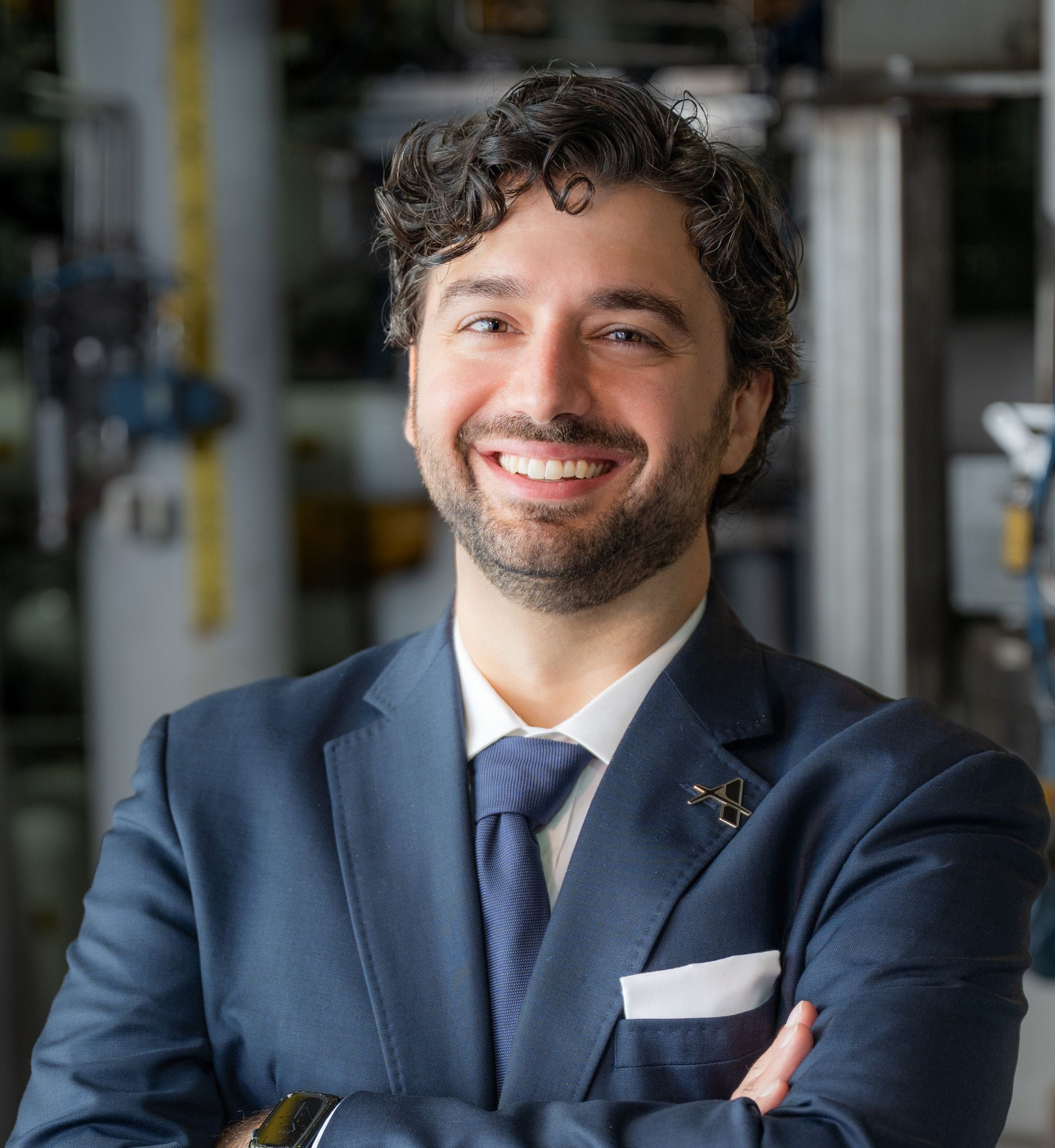
Where Newton brings the operational and construction discipline, Co-Founder and CTO Paul Keutelian brings the nuclear pedigree and the systems-integration experience that make a fullstack nuclear energy deployment program possible.
Keutelian speaks with the polite candor of his native Midwest, an approachability so disarming it buries his extensive bona fides. He holds an advanced degree in Nuclear, Plasma, and Radiological Engineering from the University of Illinois Urbana-Champaign, studying under George H. Miley, and spent three years in radiological lab operations. He was the cofounder of Radiant, where he helped design a helium-cooled, high-temperature gas reactor originally conceived for Mars and later converted for terrestrial use, writing the platform’s original nuclear and fluids physics simulation and leading its initial multiphysics modeling. His earlier fusion research put him among the early multiphysics plasma modelers working on fusion ignition and deep-space thrust and power applications — work that drew recruiting interest from the defense industrial base.
“What I’m doing is making decisions that turn designed reactors into buildable reactors and putting together the teams that can do that,” Keutelian said.
Keutelian is clear that no single person designs a reactor alone, and he doesn’t claim otherwise. His value, as he puts it, is knowing “enough to make the right calls from a more capable, competent, and qualified team” — and having built that kind of team before.
After Radiant, Paul supported startups to large primes in the nuclear and aerospace industries as a consultant, working everything from engineering, design process development, team development, and business guidance.
“I am constantly interacting with all these disciplines, and most of my job is studying what everybody is doing, finding common threads and trying to give the team a cohesive direction,” Keutelian said. “And my goal is to translate these directions in their language, because a fluids person doesn’t understand an electrical person, doesn’t understand a civil person, but the choices each makes impacts these other groups, and most of my career has been diving deep with all these disciplines and learning those languages.”
In parallel, Keutelian built a career managing some of the most volatile substances and operations in aerospace, at times serving as a specialist in dangerous operations — including during early Starship tests — and assisting with Falcon anomaly investigations for other high-profile incidents such as AMOS-6, with pressures and temperatures often many times beyond anything Applied Atomics’ plants will see. He also led programs with outsized institutional reach: a design and operations guide used across hundreds of engineers, deploying a nationwide preventive maintenance program extending production maintenance to the launch sites, and an instrument calibration program bringing tens of thousands of uncalibrated devices to zero within months.
His time at SpaceX included working with the Space Force to certify Falcon Heavy and pre-flown Falcon 9s for the National Security Space Launch program. He coordinated with the Air Force, NASA-LSP, and NRO-OSL on the multi-billion dollar contract and was part of the team spearheading the certification of Falcon 9/FH. Because of his expertise across disciplines, he breaks through historic barriers between engineers, analysts, and regulators.
Even if it’s masked by his “aw shucks” demeanor and humility, Keutelian is an actual genius. Not of the flamboyant egotist variety common at the cutting edges of chic industries, his is the rare kind of mind that can hold intricate details about completely unrelated disciplines and fields, and map in real time how distant pieces, people, and procedures need to fit together to make a complex system work. In conversation, Keutelian can switch seamlessly between fluid dynamics and novel nuclear fuels to work force dynamics and community engagement protocols. These are not siloed specialties in his conception of the project at hand: they are vertically integrated processes that need to be in dialogue with one another if things are to work like they need to.
Nowhere is this more uniquely on display than the way Keutelian speaks about the regulatory steps of selling nuclear energy to clients. Whether it’s a gesture of contrarianism for one surrounded by Silicon Valley bravado or something innately respectful in his personality, Keutelian speaks admiringly of regulators, and is more than willing to build backwards in systems design to meet what he views as their reasonable requests.
“It’s a reframing of the whole relationship between an engineering team and regulators. What I often say is regulators embody the sum of the industry’s knowledge. They’re trying to help us, and if we learn from them properly, they make us better and faster,” Keutelian said.
This isn’t a hypothetical admiration or some marketing ploy. While at SpaceX, Keutelian grew frustrated by constantly being asked to fill out quality assurance paperwork he didn’t understand. He applied for a position on the reliability team “mostly out of spite,” got it, and built his own expertise in quality assurance and regulatory affairs.
Keutelian’s general approach is that it’s a waste of time – sometimes a dangerous one – to try reinventing complex components others have already figured out.
“Designing a Light-Water Reactor is a well-known thing at this point.” - Paul Keutelian
Roger Chin: Software Built for Machines That Can’t Fail
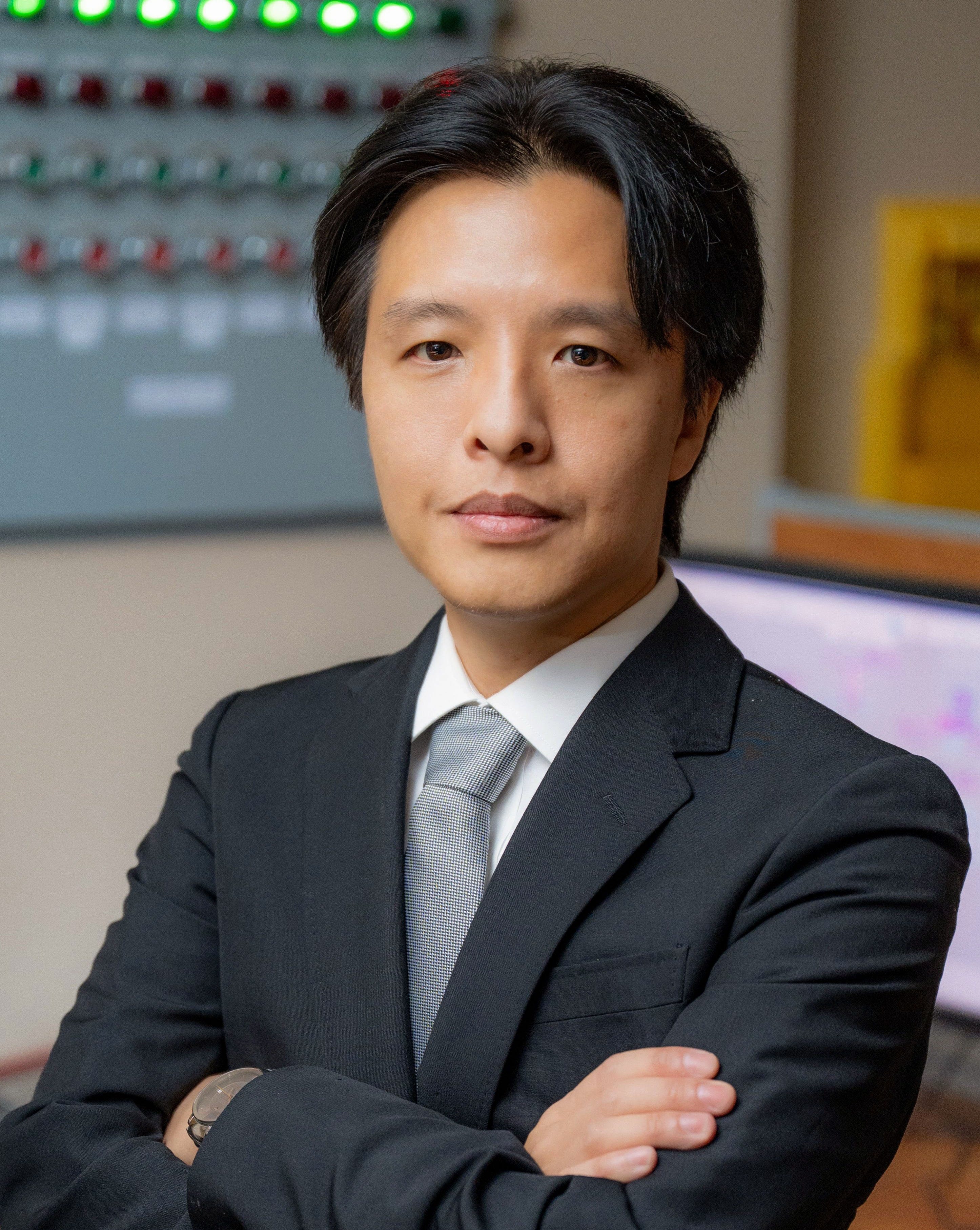
Roger Chin’s path to nuclear software runs through some of the highest-stakes codebases in aerospace and finance. He began in high-frequency options trading and was a founding member of a proprietary trading firm. There, he wrote a networking stack and trading interface that handled thousands of options updates a second at sub-millisecond latency. He went on to work in the advertising divisions at Google and Microsoft, where his team’s software shipped as part of the Xbox One, Windows 8, and Windows Phone.
From 2017 to 2020, as a senior avionics firmware engineer, Chin and one other engineer wrote the firmware for SpaceX’s Falcon 9 engine controller in six months — more than 20,000 lines of code, including a new network stack and drivers for every peripheral and IC — while passing regulatory review with the Air Force and FAA. Each controller he designed manages dozens of actuators and sensors at high frequency with fault-tolerant, redundant architecture, and the code became the technical basis for SpaceX’s subsequent avionics firmware. Later, it was repurposed for Dragon 2’s nosecone and seat controllers, as well as early Starship prototypes. He also wrote Dragon 2’s life-support gas sensor firmware and the first code to establish a laser link in space on the Starlink laser communication system.
“It's all about that long-term plan.” - Roger Chin
As Radiant’s software architect from 2020 to 2025, Chin designed the company’s simulation, modeling, and hardware-in-the-loop platforms, including SimEngine, a digital twin package that let development flow seamlessly from modeling through hardware-in-the-loop testing — the software behind Radiant’s Kaleidos digital twin and every hardware milestone through passive cooldown testing.
Like rockets stacked atop payloads, nuclear reactors carry a degree of risk. Chin, like Applied Atomics’ other leads, designs for safety as a matter of course, not an afterthought. That means building code stacks and interfaces that people outside the company can navigate in an emergency, and structuring redundancies into programming so that there is always a safety net.
Chin says for both rockets and nuclear reactors, “the majority of the problem isn't actually in getting it working. It's about figuring out what the vulnerabilities in the supply chain are.”
A Team That Has Already Done the Hard Part
None of these executives set out to build nuclear power plants. They wanted a new way to sell energy to customers faster, safer, and cheaper than the existing options. For many, many potential customers, that means nuclear facilities built on site in new ways that haven’t yet been tried – not because there is anything mystical or magical in nuclear fission, but because the industry has been stalled for four decades. The plant isn’t the hardest thing any of them have built — it’s simply the next one.